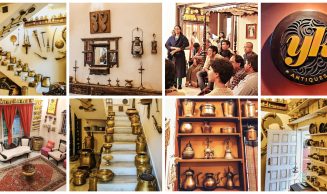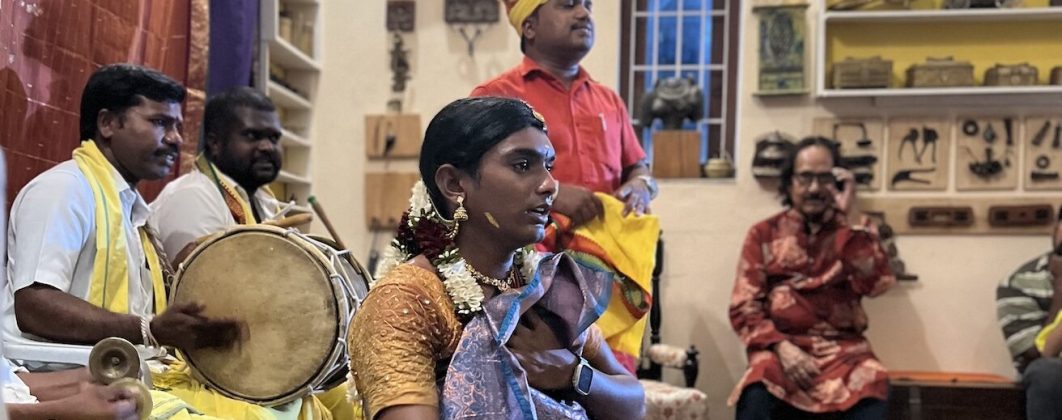
On the evening of June 1, 2025, we at YK Antiques opened our doors to the stirring sounds and heartwarming tales of oggu katha, a traditional folk art form of Telangana. The team at YK Antiques Home Museum wanted to bring something unique this time around, something that represents Telangana’s rich culture, given our location here in Hyderabad. A bit of brainstorming and a few calls later, Shri Chandrasekhar Singh, a mutual friend, introduced us to Dr. Kumara Swamy G, a veteran artist with over 120 theatre productions under his belt who helped us bring this event to life.
YK Antiques Home Museum is listed in the INTACH’s (Indian National Trust for Art and Cultural Heritage) directory of museums in India, and when we approached the INTACH Hyderabad team with the event brief and our intent to bring traditional folk performing arts into city spaces and to the city audience, they readily agreed and helped us promote it. The date was set, preparations underway, and we were excited and ready to make this happen.
Oggu Katha – An Intro
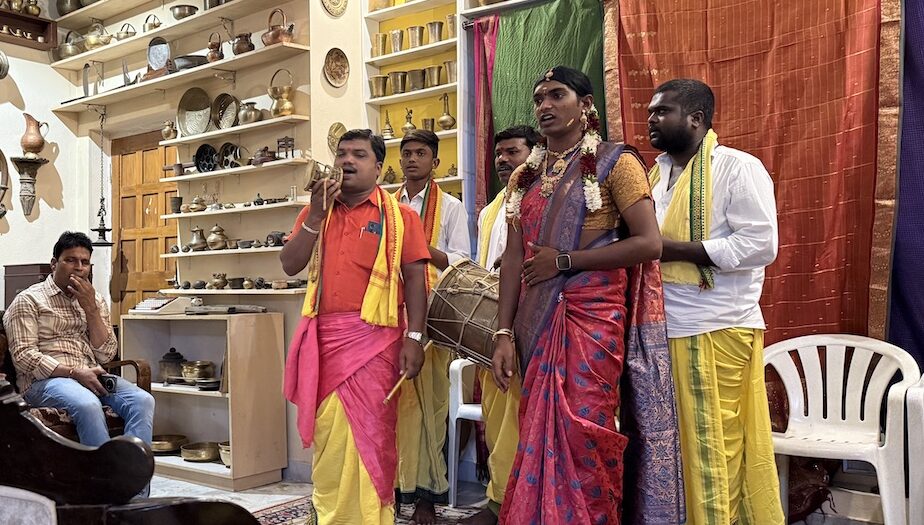
Oggu katha is a traditional folk theatre form in Telugu-speaking regions of Telangana and Andhra primarily performed by pastoral communities like Golla (Yadavs) and Kurumas. It is the combination of artistic oral tradition and melody which comes alive through praising various local deities. All oggu artists are folk performers traveling from one village to another, singing praises of divinity through beats and expression. The artists use various musical instruments as part of the performance, notably – jaggu (a small drum which resembles the damarukam), kirtal dolu drums, the lively kanjira, wind instruments and more which bring the divine sounds to life.
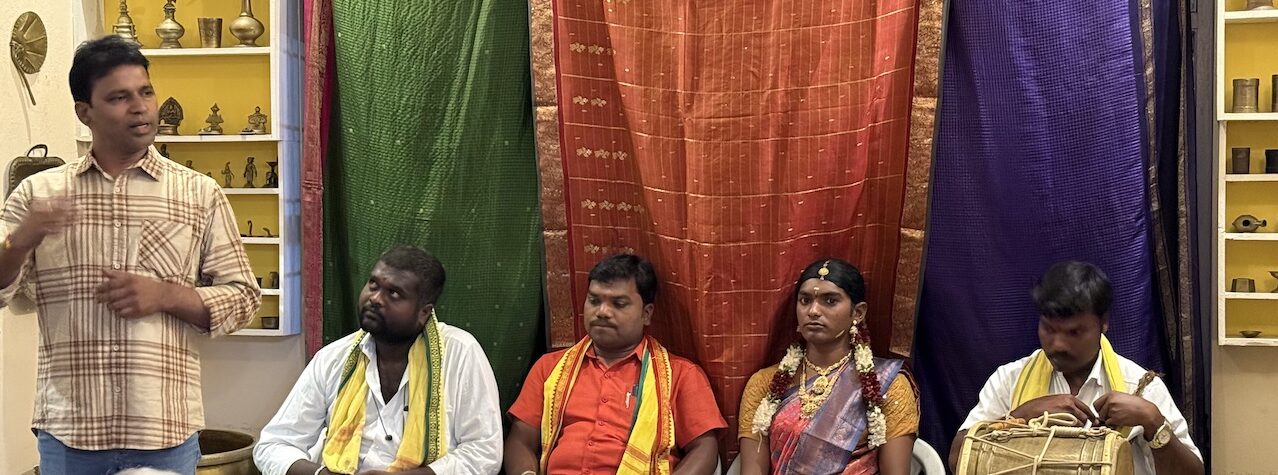
An unforgettable evening
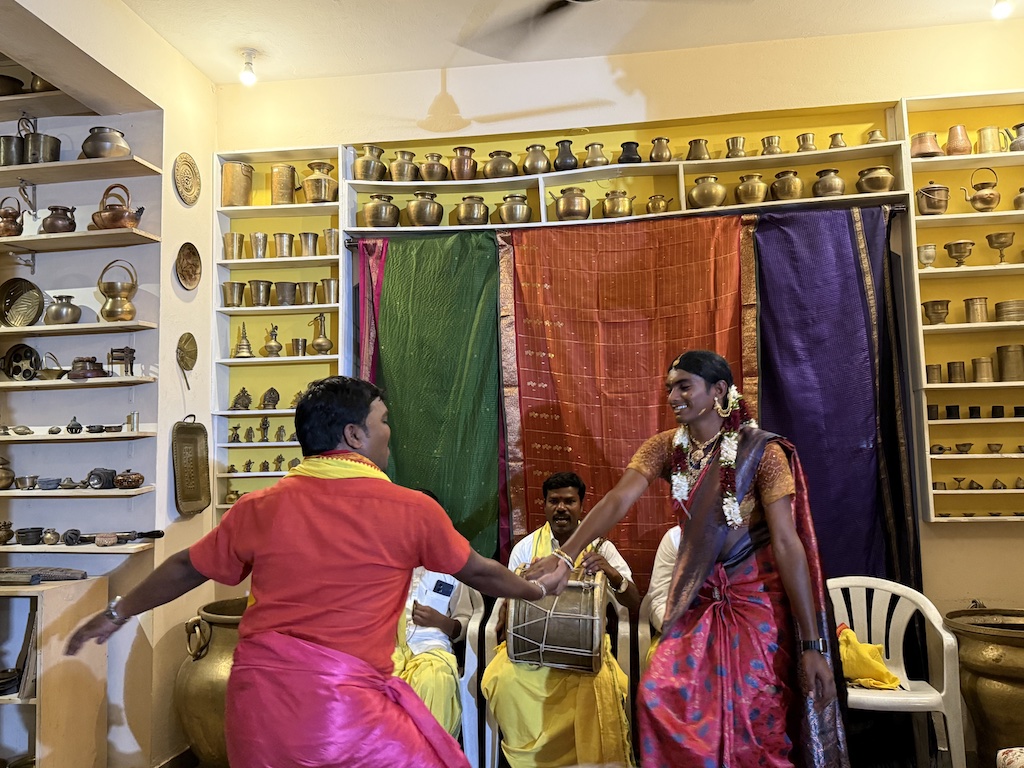
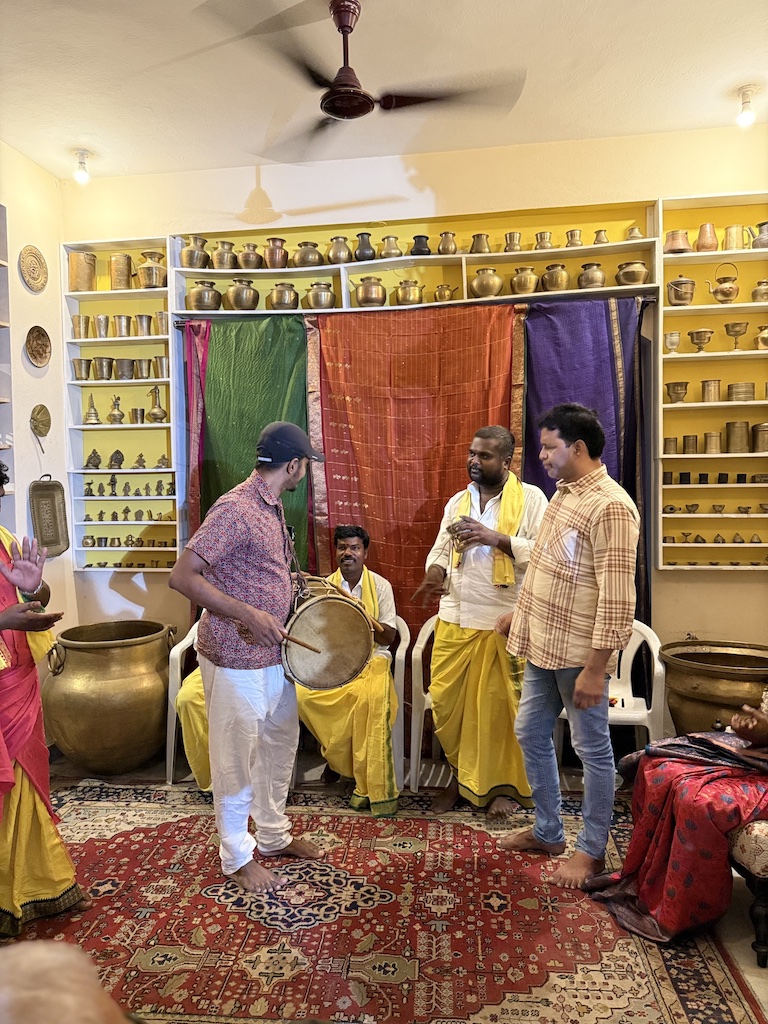
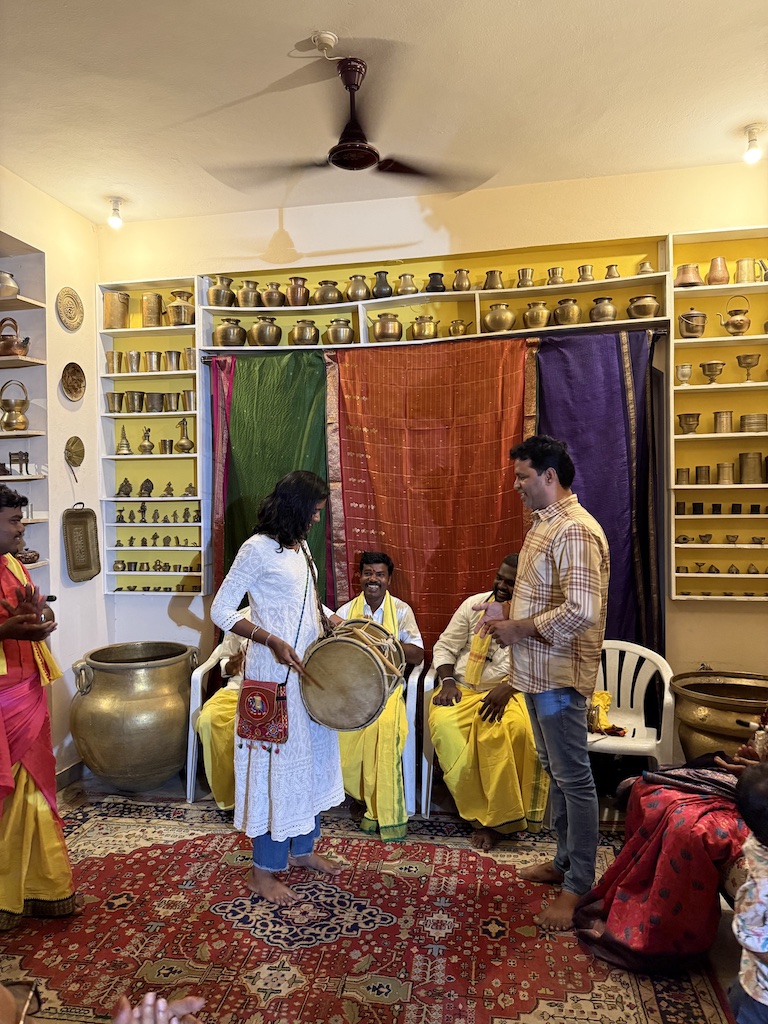
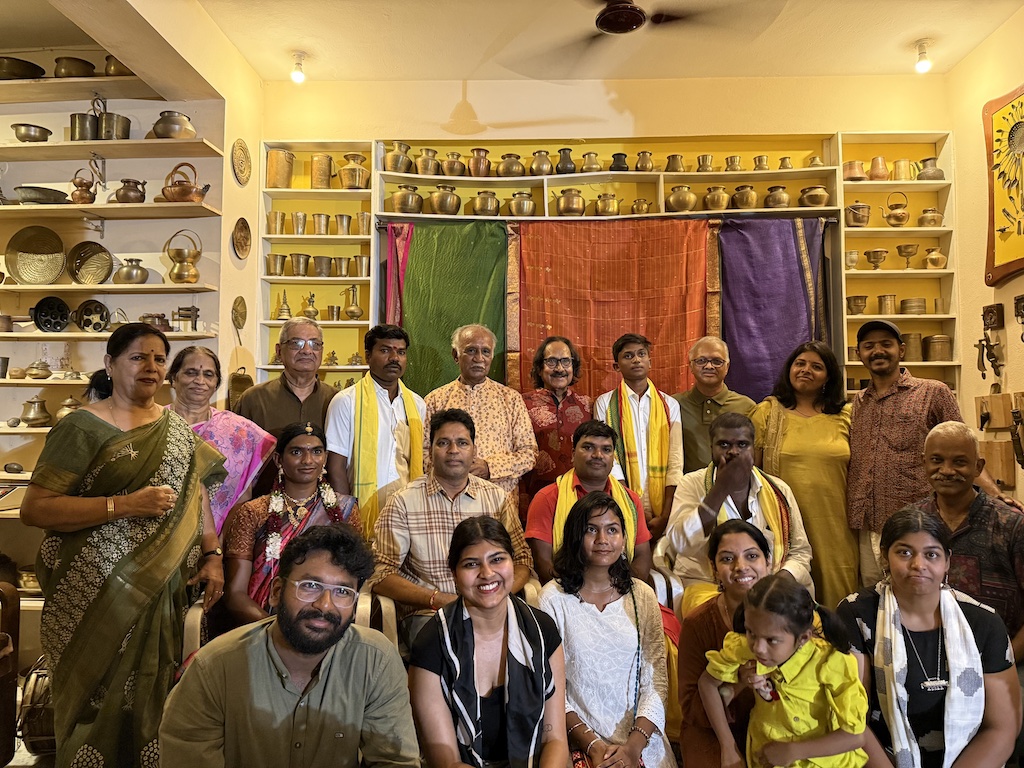
We welcomed 17 enthusiastic guests and after the short meet and greet over Irani chai and Osmania biscuits, the stage was all set! Our host for the evening was Nivedita, who called upon Mr. Y. Krishnamurthy (YK) and Dr. Kumara Swamy to introduce YK Antiques, oggu katha, and the artists. And it began! The artists weaved many stories of Mallanna, Beerappa, Yellamma and various other deities into the performance. It brought out a multitude of feelings like grief, love, humility and many more. The stories were captivating, the entire cast was extremely enthusiastic, and each story culminated in a song and drumbeat that further captivated the audience into the enchanting worlds. The traditional attire of the artists and their facial expressions pushed the vibrant presentation to a level beyond seeing and listening. The narrative and portent of oggu katha was to convey the interwoven themes deep in culture and spirituality.
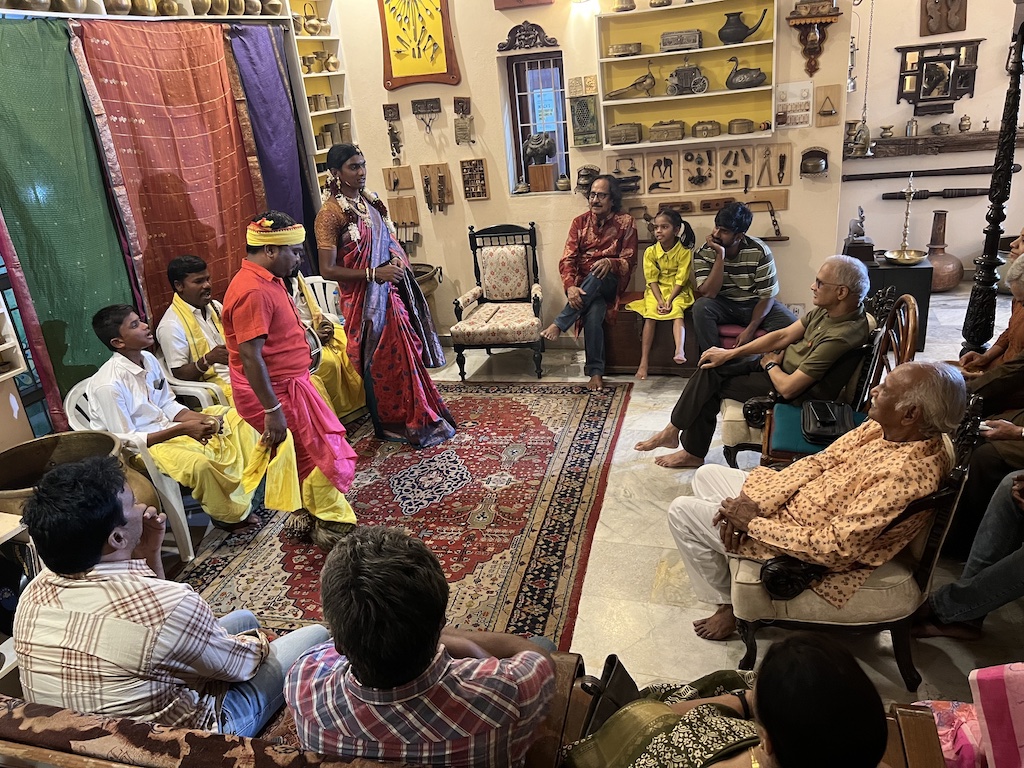
A notable part of the evening was the interaction between the performers and the audience. The home museum was filled with laughter, music and dance. The team welcomed questions and shared insights into their lives as traditional storytellers, and spoke about the challenges of preserving oral traditions and performing folk art forms in the modern era. The artists also shared their thoughts on what drives them to do this to keep these narratives alive for future generations by performing in unconventional spaces and taking this artform to newer audiences.
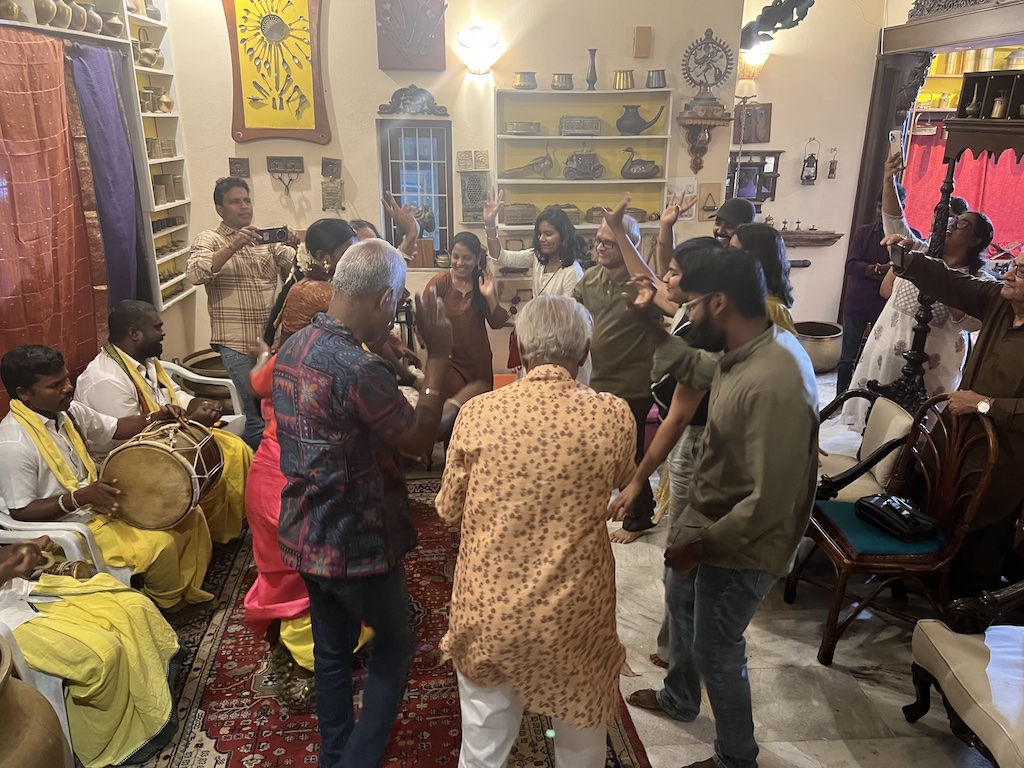
Urban audience, traditional folk art forms & unconventional performance spaces
For many in the audience, it was their first time experiencing oggu katha, and they described the powerful performance as ‘impactful’ and ‘soulful.’ Generally, oggu katha is performed outdoors or in big halls where a large number of people can watch the performance. It was a challenge to host this in a smaller place (indoors) and we were a bit apprehensive about it. But the artists were confident about performing at the home museum filled with cultural antiques, and the ambience added to the whole vibe of the performance and took the audience members back in time.
This folkloric immersive narrative experience of deep storytelling of mythology, dancing, and songs was truly unforgettable. The audience members voiced that more such performances and experiences like oggu katha and lesser-known folk art forms must be brought to newer audiences in the cities, with houses, apartments, and smaller social places serving as new-age venues.
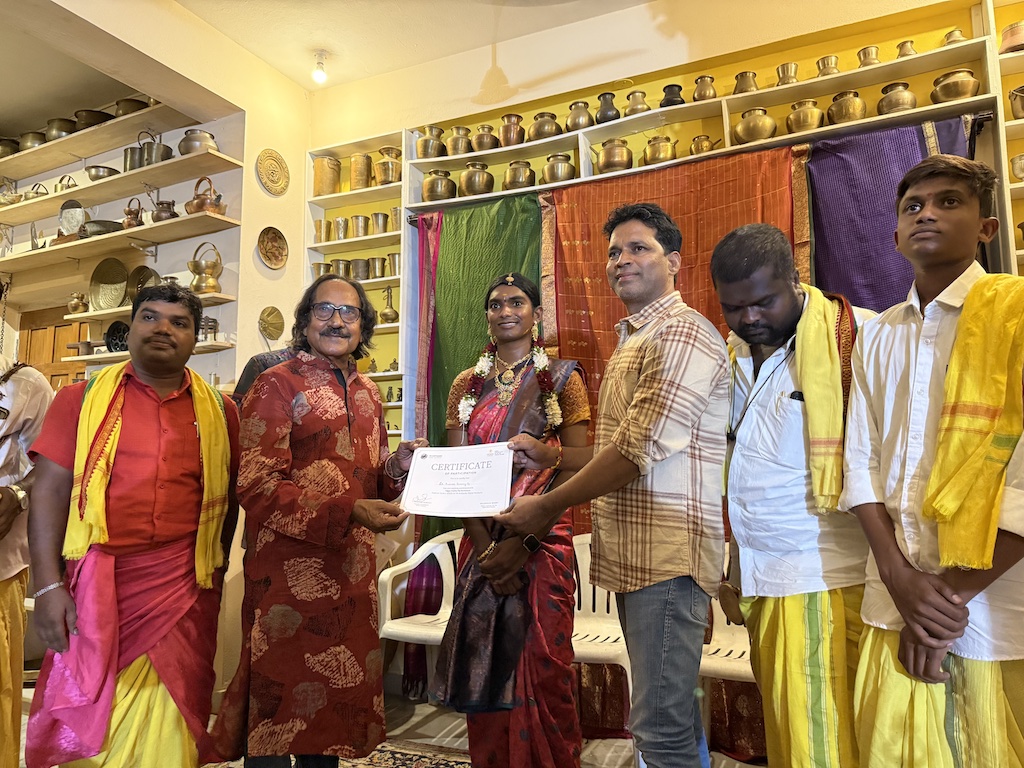
We, at YKA, aim to host more such events and gatherings where city audiences get to engage with tradition through the heritage arts and cultural conversations. We strongly feel that by preserving such art forms, one can foster deeper and more intimate access to India’s diverse culture, honoring the past while inviting the future.