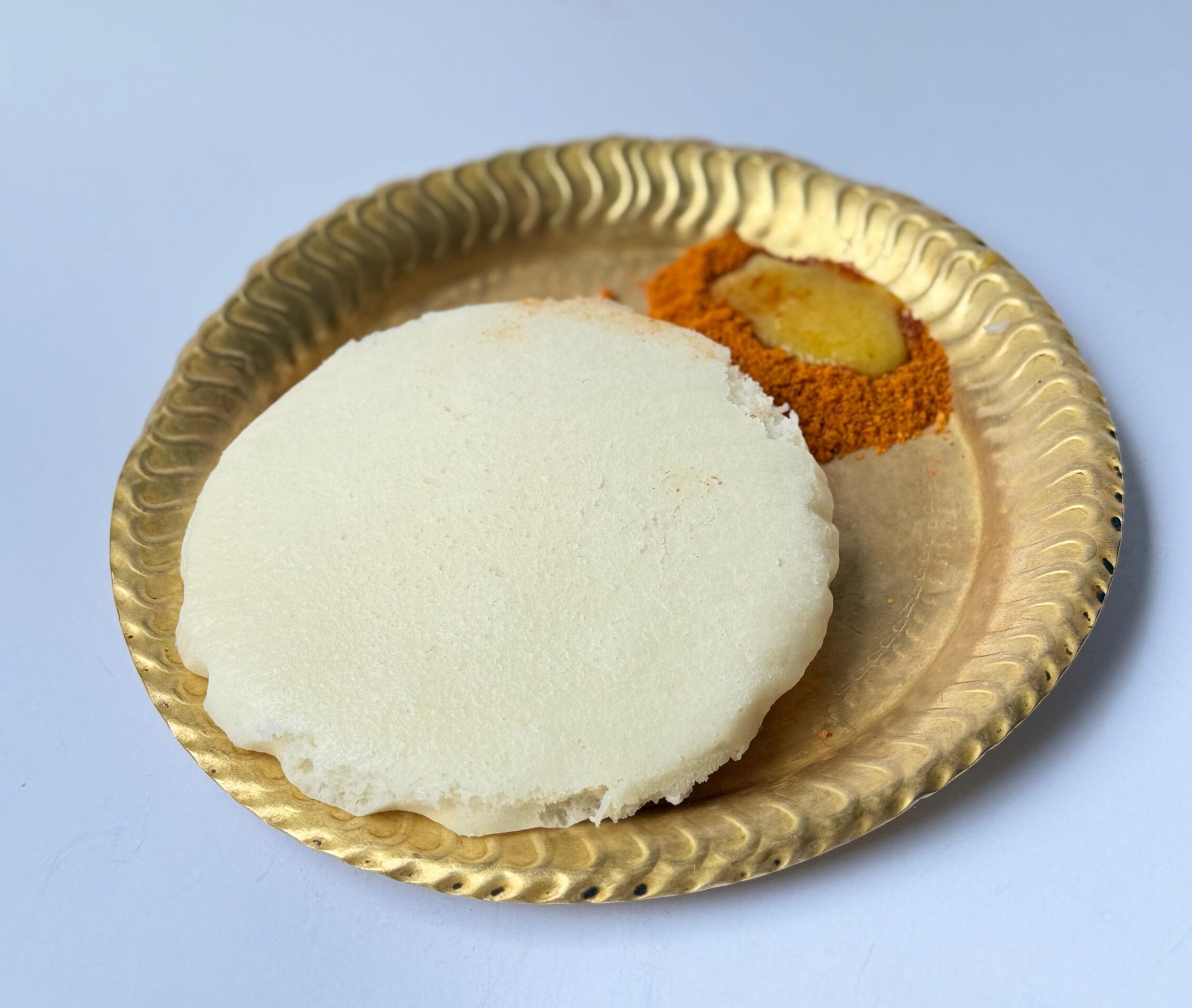
Have you ever had thatte idli? Idlis come in various forms – standard idli, rawa idli, button idli, kotte idli and more. I enjoy eating thatte idli whenever I’m in Bangalore. I always wanted to have an antique thatte idli patra in my collection and finally found it. This lovely antique that you see is a latest addition to the collection here at the home museum. This one is about ~90 years old and I acquired it from a trusted source. Unlike modern versions of idli makers that we now see, this thatte idli patra stands out for its unique design and material.
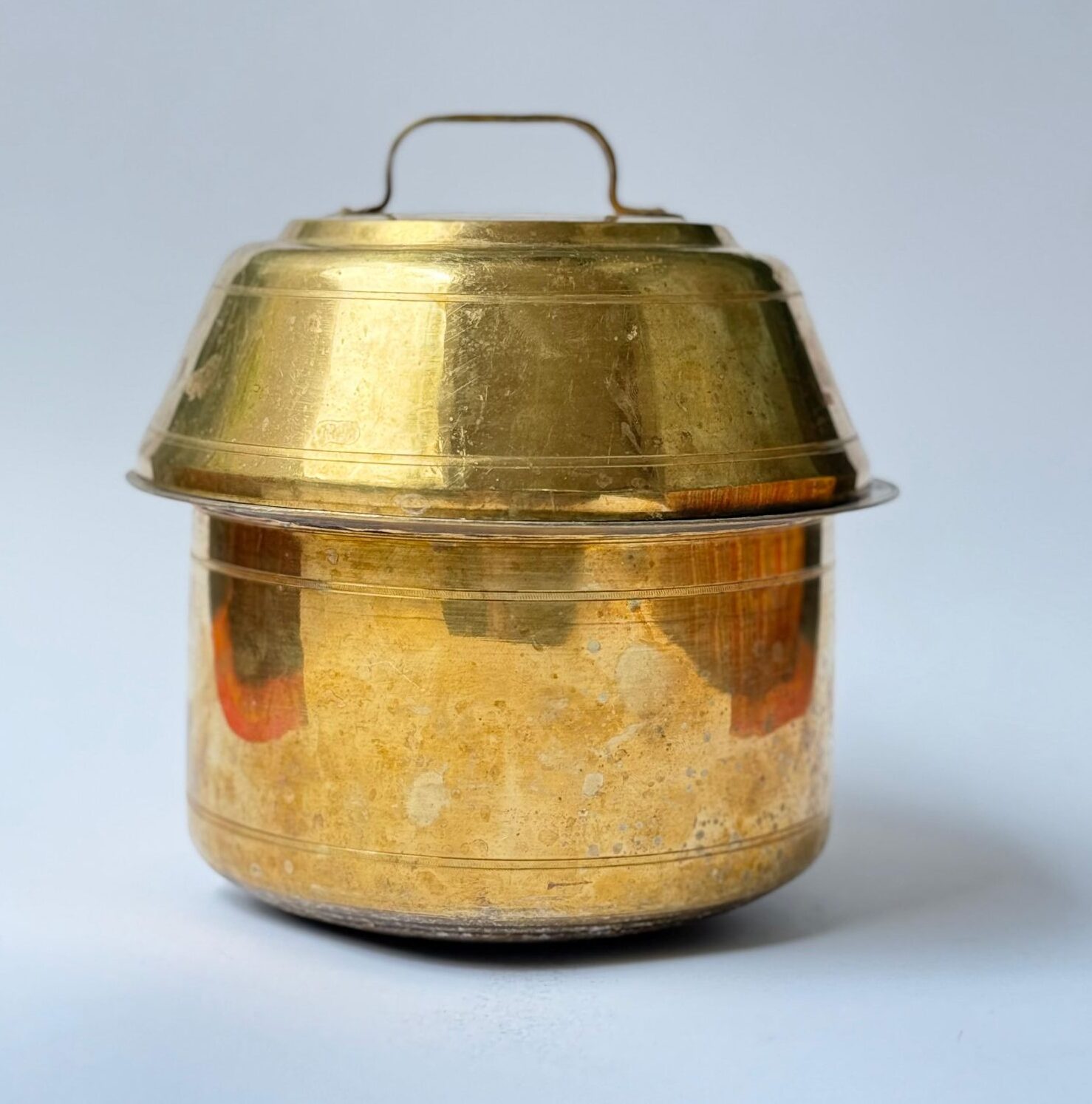
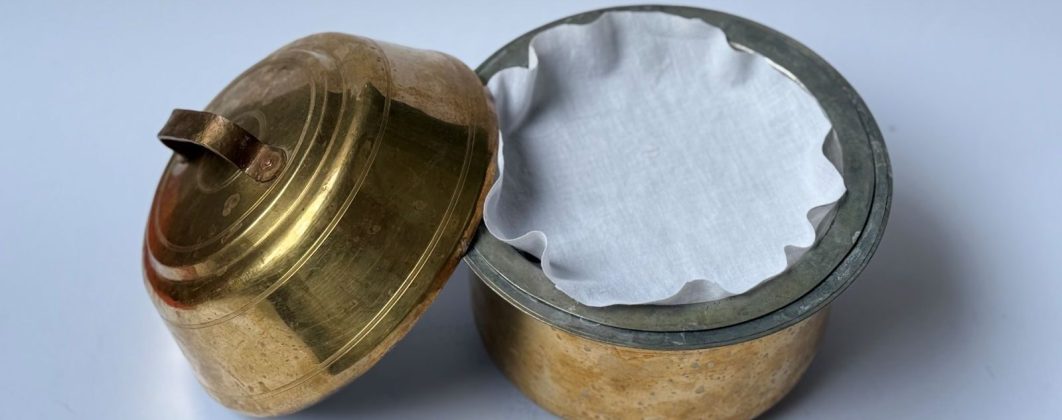
Made of brass with a kalai (tin) coating inside, it measures approximately 7.3 inches in both height and width. Idli makers come in different shapes, the most common being a plate with individual cups for the batter. However, as the name suggests, this particular style reflects the thatte idli model, thatte meaning plate in Tamil where the idli is steamed on a flat surface.
I acquired this antique thatte idli patra from Chettinad, Karaikudi in Tamil Nadu from an associate who I have known since the past 15 years. I had been searching for an antique thatte idli patra for a long time. I wanted one to use at home and also exhibit at the home museum. When this rare and smaller-sized piece became available just a few months ago, I was thrilled. The smaller the patra, the rarer it is, making this find even more special. I got a set of pictures and a few details from my trusted source and placed an order immediately and received it within two days.
Thoughtful design & compact form – A perfect balance
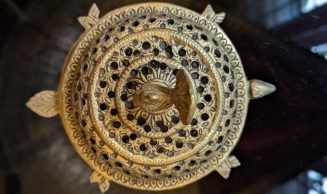
What I love most about this antique thatte idli patra is its thoughtful design and charming, compact form. It’s circular in shape with a flat internal plate that has 17 holes, and the outer body features two simple parallel line designs that add to its vintage appeal. The bottom part is almost cylindrical, while the top has a dome-like structure, which is not just aesthetic but also helps circulate steam effectively.
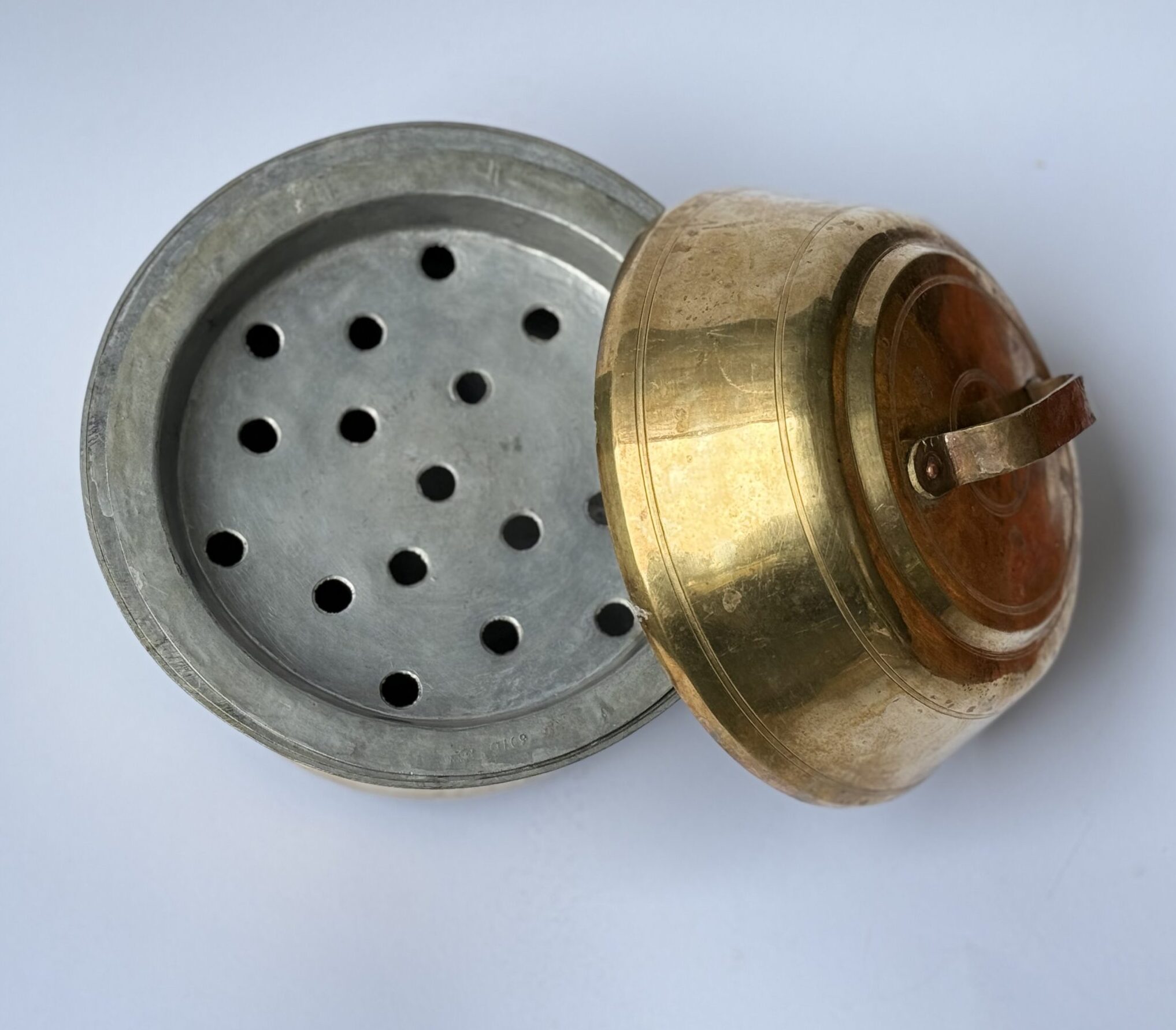
This design ensures even cooking and what’s especially convenient is that you can steam the idlis and eat them right off the same plate, there is no need to transfer it to a separate plate. The plate itself has perforations giving it a sleek look and better steaming. It’s so versatile that you could even steam momos, modaks, or anything else in it. I was pleasantly surprised to find a name in Tamil inscription on it too, adding a personal and historical touch to this already beautiful piece.
Karnataka connection!
Idli, also known as plate idli, is quite different from the regular idlis we usually see. These idlis are larger, flatter, and steamed in shallow plates or round trays instead of the usual cup-like moulds.
I first came across thatte idli while visiting Bangalore a few years ago. It is quite popular in Karnataka. According to sources online, it is believed that thatte idli originated in the region of Tumkur, which is located in the southern part of Karnataka. It is said that the thatte idli was first prepared by a small hotel in Tumkur, which became famous for its unique and tasty idlis. A popular food blogger, Kripal Amanna, in one of his videos, visited the iconic Sri Shiva Darshana Shashi Thatte Idli Hotel, the most popular stop on the Bengaluru-Mysuru highway that dates back to the 1950s. Now, you find places serving thatte idlis all over Karnataka and in parts of Tamil Nadu.
The beauty of brass!
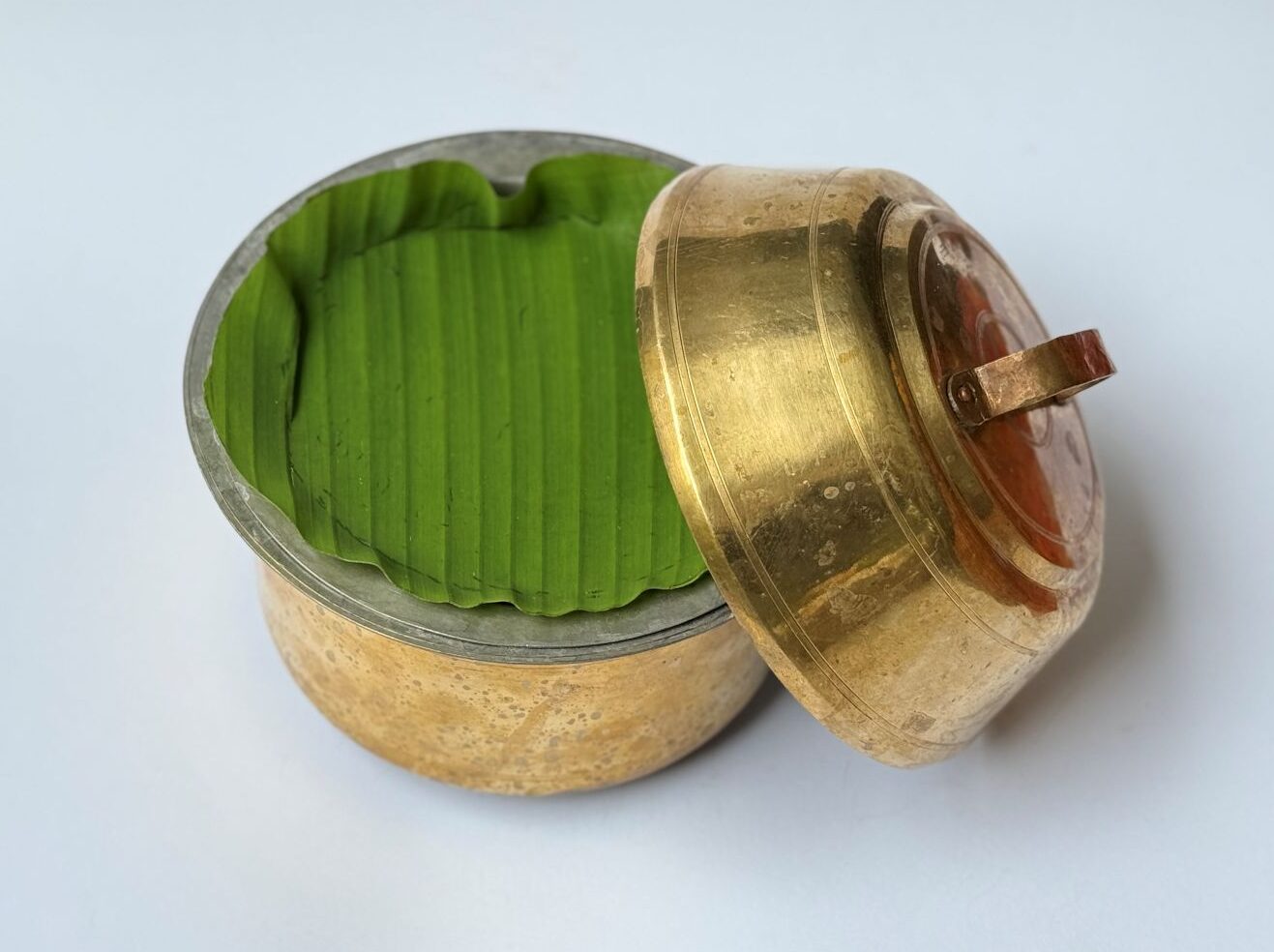
This thatte idli patra is made entirely from brass, including the handle, which is strong, suggesting it was built to last. The body is made from a thick sheet of brass, a metal known for its durability and traditional value. Brass is an alloy made by combining copper and zinc, and it has long been used in Indian kitchens for its health benefits. Cooking in brass utensils is believed to improve immunity in the body along with enhanced nutrient and metal intake, making this idli maker a good addition to your kitchen.
Is this brass patra easy to clean and maintain?
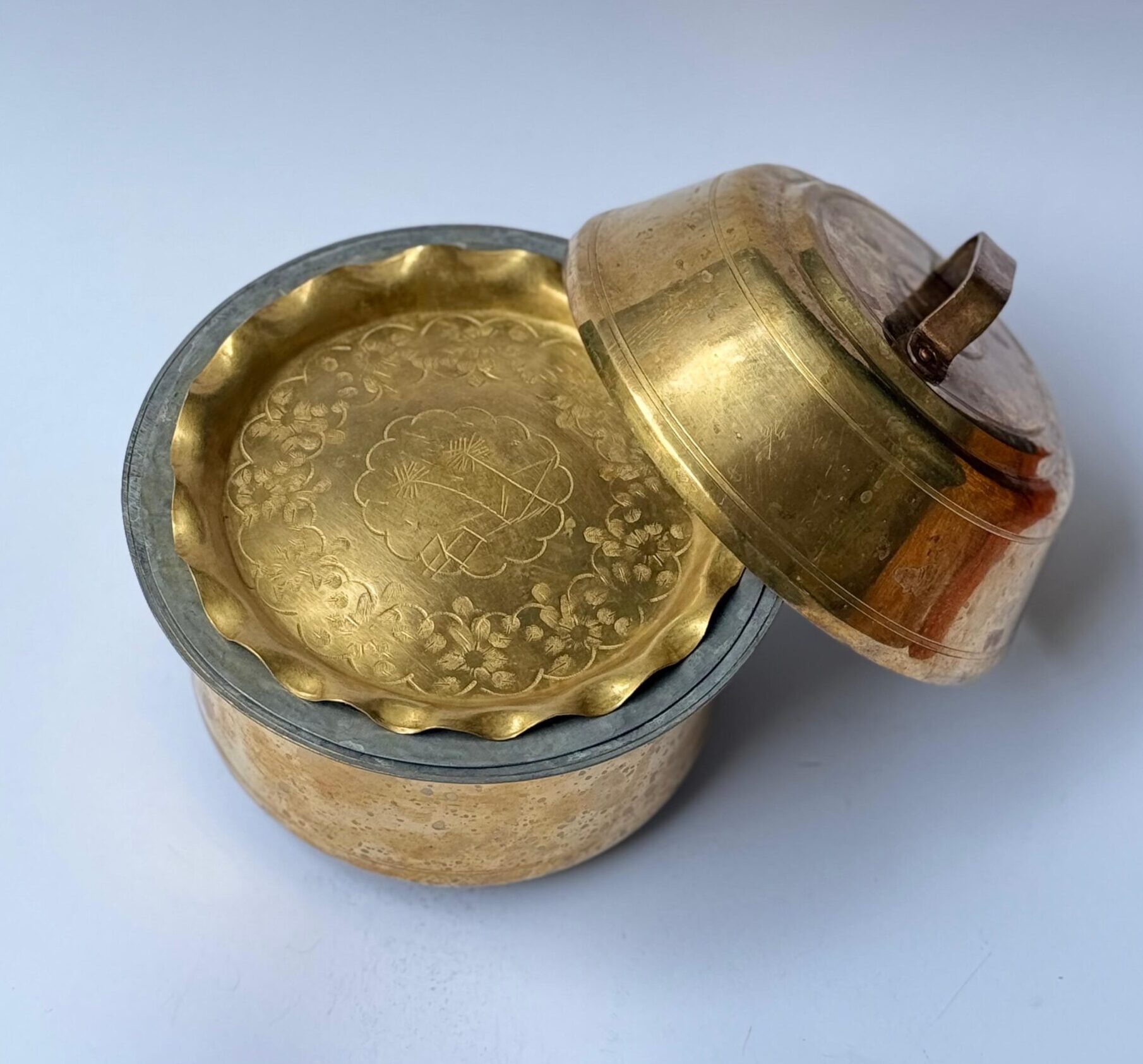
Brass is a low-maintenance metal, making it easy to care for compared to materials like copper, which requires frequent cleaning. For everyday upkeep, a mild soap is sufficient to clean brass vessels. Once in a week or two, applying a bit of tamarind paste or juice helps polish the surface and keep it shiny. Unlike copper, brass doesn’t need daily scrubbing, and stays in good condition with minimal effort. It is important to avoid using abrasive materials or strong chemical soaps, as these can damage the metal and cause it to wear down over time. Traditional and gentle cleaners like multani mitti, charcoal ash, or even natural options like lime juice are excellent for maintaining brass. They are not only safe for the vessel but also gentle on your hands, making them ideal for regular cleaning.
Modern-day idli steamers – All about convenience?
Compared to older idli steamers, today’s idli patras are more about convenience and quantity, but their usage might make us miss out on the traditional health benefits that brass and tin-coated utensils offer. Mid-size idli patras often come with the capacity to make 9 or 12 idlis at a time. Many people prefer to use just one reku or plate and make only 3 or 4 idlis if that’s all they need. That’s why medium-sized idli patras are usually the most practical choice for families as they offer flexibility. In comparison, the older idli patras were not just about volume but also about material, quality, and thoughtful design that supported healthier cooking.
Why a sudden increase in demand for antique cookware?
In the last ten years or so, I have personally witnessed an increased demand for antiques, as many people today are drawn to their uniqueness, historical value, and aesthetic appeal. These antiques are often purchased either to enhance personal collections or to serve as decorative pieces in homes and workspaces. Due to the increasing interest among antique collectors and interior enthusiasts, antiques tend to sell out quickly. I experienced this first hand earlier while trying to acquire this particular piece; by the time I finalized my decision, it had already been sold. This is a good example of the growing popularity of antiques but also the urgency required in securing such exclusive items before they’re gone.
Why do hotel-made idlis taste different from home-made ones?
There’s a noticeable difference between hotel idlis and the ones made at home, and much of it comes down to ingredients and preparation methods. Home-made idli preparation typically involves soaking rice and black gram separately for at least 12 hours, grinding them into a smooth paste, and then fermenting the mixture. The process ends up taking a long time, but it results in soft, fluffy idlis with a natural texture and taste. Whereas the hotel idlis often appear brighter and unnaturally white, sometimes due to the use of whitening agents or added fluffing substances to enhance appearance and texture. Some hotels prepare idlis with idli rava while others use rice dough. In Tamil Nadu, idlis are made using which helps create a sponge-like texture. Overall, while hotel idlis may look more polished, home-made idlis carry a richer, more authentic flavour.
Best accompaniment to idlis – Chutney or Podi?
Here are two simple yet tasty accompaniments that go best with idlis. Easy to prepare, tasty and nutritious. What’s your pick?
Simple Coconut Chutney Recipe
Ingredients:
For the chutney:
For the tempering (tadka)
Method
For the chutney base
For the tempering (tadka)
For the finishing touch
Your coconut chutney is ready to serve! Pairs perfectly with idli, dosa, upma, pongal.
Tasty Karivepaku Karam Podi (Curry Leaf Powder)
Ingredients:
Method:
This podi goes well with steaming hot idlis. You can sprinkle the podi on thatte idli and have it or add a dollop of ghee to the podi, mix it well and have it with idlis, dosas or steamed rice for a burst of flavour.
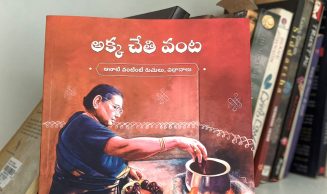
For more such traditional Andhra recipes, you can order a copy of the book Akka Cheti Vanta, a collection of recipes in Telugu shared by Late Mrs. Vakkalanka Suryakantham garu, my elder sister, and published by YK Antiques Home Museum. Click here to order a copy!
The book has the 70 easy-to-prepare Andhra recipes for beginners from the family’s treasure trove of recipes and culinary methods that have been guarded for generations. While the photographs give you a glimpse of the delicious home-cooked meals, the snaps of the traditional utensils used for cooking and serving add a unique flavour.
Make idlis at home or order via food-delivery apps?
When was the last time that you ordered idlis via food delivery apps? I sometimes do that when I’m not in the mood to cook or when there are visitors at home. There has been a noticeable decline in the number of people preparing idlis at home, largely due to the time and effort involved in making not just the idlis but also the accompanying chutney and sambar. In today’s fast-paced lifestyle, preparing multiple items in the morning can be challenging, leading many to seek faster alternatives. More people are turning to food delivery apps for convenience or purchasing ready-made idli and dosa batter available in the market. But is it healthy in the long run? Well, that’s debatable.
If you have any memories of seeing/using thatte idli patra from your village home similar to the one featured in this article or can suggest accompaniments that go best with thatte idlis or know of any famous places serving piping-hot tasty thatte idlis, do share them in comments. Would love to hear your thoughts!