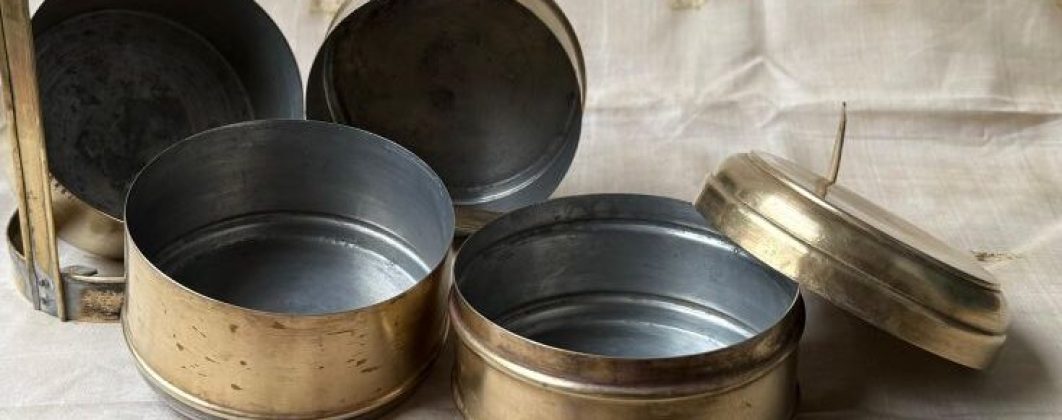
A tiffin carrier might sound very simple and nothing too extraordinary, but in reality, it holds far more than just food; it carries memories, emotions, and a sense of comfort that is passed on. Whether it’s the nostalgia of school lunch breaks or the routine of meals at work, the tiffin becomes a symbol of care packed into each layer. It reminds us of the excitement of opening a box filled with food lovingly prepared by someone thinking of us while we were away. The humble tiffin carrier connects generations, serving not just meals but memories wrapped in warmth.
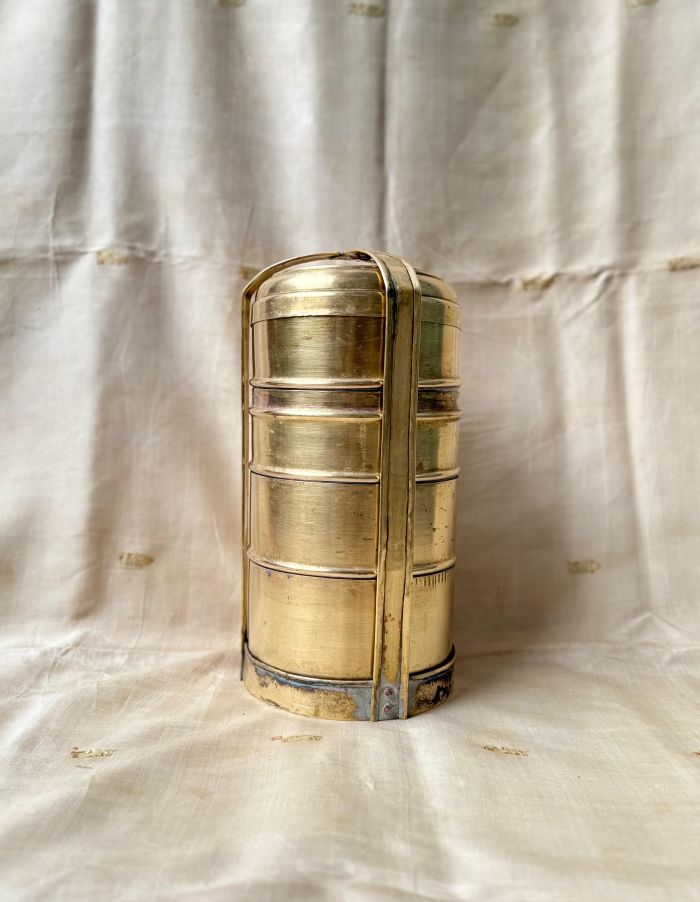
A souvenir from Rajasthan
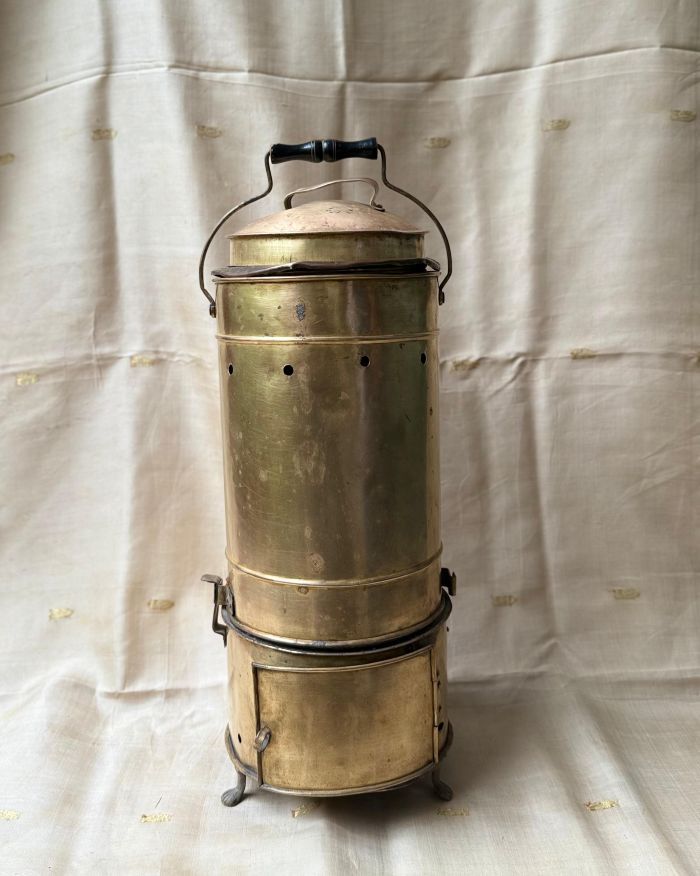
During my visit to Rajasthan in 2015, I came across this beautiful antique tiffin carrier that I knew would be perfect for my home museum and add to my collection. I had no idea I was holding something possibly ~80 years old. But there was something about it. I’ve always been curious about how people lived their everyday lives in the past, especially how they stored, carried, and ate food. Food and food habits speak a lot about people, where they come from, their culture, and traditions. When I saw this particular tiffin carrier box, it was something different and I wanted to exhibit it in our museum.. I didn’t know if I could find another one like this in a functional condition, and so I made a deal with the seller and got it back with me.
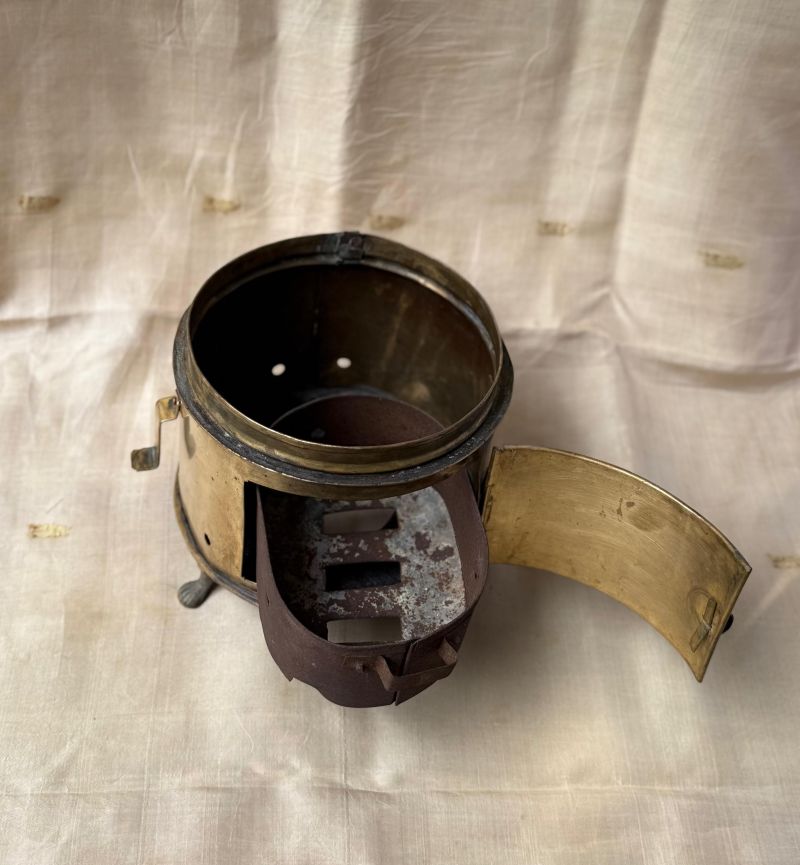
What fascinated me most was the story that got revealed from our research – a tiffin carrier box like this is not just about food, but also about work, travel, care, and togetherness. Back in the day, it was used by engineers surveying or laying at far-off places on new railway lines or telephone connections, who used to get food that would suffice for more than two people. It was a lifesaver as it kept food warm for more than 12 hours with the help of a little charcoal chamber built right into it. Imagine that food, still hot after a whole day’s journey!
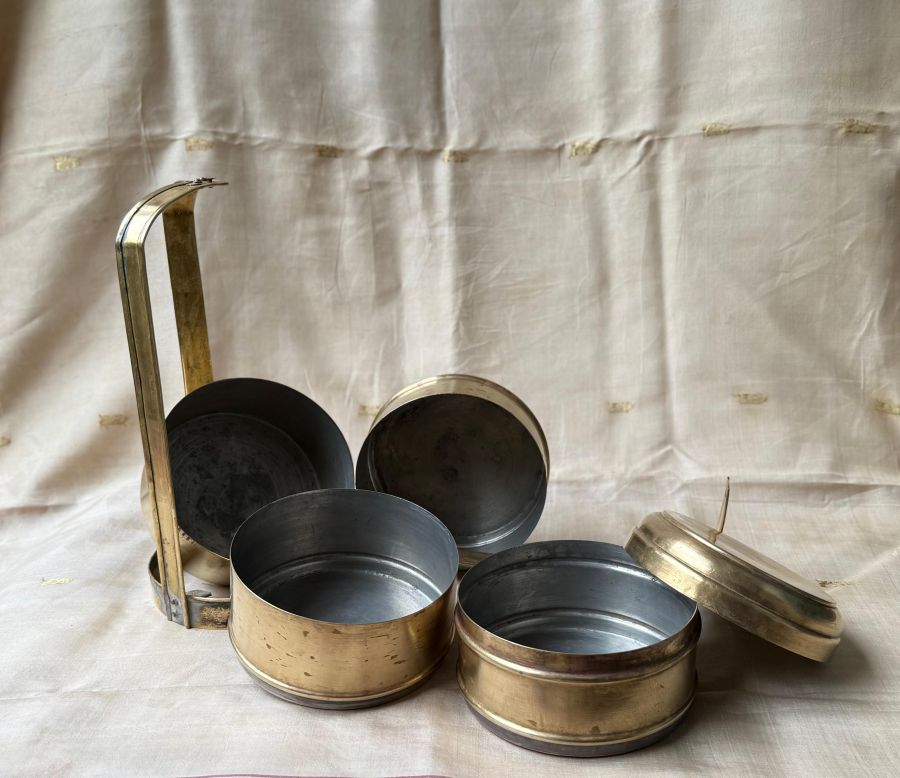
Four tiers + charcoal box
This antique tiffin carrier, handmade of thick brass, this piece reflects a time when materials were chosen with care and love. Brass is naturally durable, and was the obvious choice for people in that era. This tiffin has four tiers, the biggest one likely for rice, with smaller ones stacked above with dal, curries made with vegetables/meat, salads, and curds. It has two sturdy handles, a lid, a clasp mechanism to lock it all in, and a clever little three-leg base to elevate it from ground-level and safeguard it from anything that could contaminate the food or ruin the carrier. There’s even a separate chamber for burning coal to keep the food warm. The entire carrier assembly is kept in a cylindrical-shaped brass shell, which acts like an insulator and keeps the food warm for a longer duration. The box is detachable, which makes it easier to use. This two-layer insulation system helps in retaining the heat and keeps the food warm. The carrier also has small holes on the surface that cover it as a ring on both the top and bottom. There is no intricate design, no ornamentation; it was made just for pure function and purpose.
Organic materials for cleaning & upkeep
The cleaning of this antique tiffin carrier reflects a different mindset and level of dedication that people had, as it was a tedious and time-consuming process, but was never seen as a burden, and was done with care because it served their loved ones. Unlike today’s quick, chemical-heavy methods, its upkeep relied on natural ingredients like tamarind paste, ash, and multani mitti, each chosen for its gentle yet effective properties.
Over the years, sometimes when I take this out for cleaning and dusting, I can totally visualize people carrying this antique tiffin carrier packed with rice, chapatis, curries, and maybe some pickles. Nothing fancy, just wholesome, homely, and warm meals that were packed with care. And it may not have been tied to any specific festival or rituals, but it certainly would have been part of communal gatherings where it may have been used to carry prasad, offerings, or simply meals for people coming together. It served a purpose that went beyond its metal frame.
Food, stories & childhood memories
Preserving antiques that have such a strong connection to our culture and traditions is what motivated me to start my collection in my home museum. And I strongly believe that we can tell a lot about our past from the way our ancestors prepared meals. Most antiques in my collection represent cooking and kitchen utilities. This tiffin carrier reminded me a lot of the one that I used during my childhood, which is quite similar, minus the charcoal box. When I look at this tiffin carrier, I know for sure that it was valued, passed down, and cared for. And now, it holds the memories of all those years, stories, and hands that used it.
Balancing convenience with traditions
It surprises me how few people today really understand or appreciate old traditional antiques like this. Some might still ask or wonder, “Did our grandparents really eat from this?” Others might just walk past it without a second glance. And yet, there are multiple modern versions of this design that exist, which are made from stainless steel, aluminum, and even plastic. They might be lighter or more convenient, but they rarely match the integrity of using materials like brass. These other materials compromise health and can lead to multiple problems. I find that many parents today are careful about what they feed their children, but in that process, they completely ignore what kind of container they pack the food in. We’ve compromised so much in the name of ease, but we often forget the deeper values of health, sustainability, and connection that these traditional pieces hold.
Looking at this tiffin in my collection, it is very hard not to pause and reflect. Something as ordinary as a food carrier, at first glance, might not seem like much, but it still holds a lot of stories that begin to speak. It tells stories of people who lived with intention, who built things to last, and who found beauty in normal things. Its design isn’t flashy, but it’s smart and made to meet real needs, shaped by the routines of everyday life. It shows how it has endured through decades, passed from one generation to another, still intact, still purposeful. It becomes more than just an object. It is a reminder of how people once lived, traveled, worked, cared, and ate. Holding it feels like holding a slice of the past, that once sat in someone’s kitchen or accompanied them on long journeys, that is now resting in our Home Museum, but still carrying the warmth of the past.